From $5K to $200K+ in Year One, Organically
Growing a profitable ecommerce business from less than $5,000 in startup capital without paid advertising.
Client Overview
Industry: Fashion Jewelry
Business Stage: Early-stage startup
Initial Investment: Less than $5,000
Primary Goal: Build a scalable ecommerce business without outside funding or advertising
The Challenge
The brand launched with very limited resources and no established ecommerce infrastructure.
The business initially operated with:
Minimal startup capital
No prior marketplace experience
No brand recognition
No fulfillment systems in place
As orders began to increase, self-fulfillment quickly became a constraint. Without a better operational strategy, growth would stall due to logistical limitations.
Approach
Instead of pursuing rapid expansion, the focus was on building a sustainable operation with controlled growth. Advertising was not a primary growth driver.
Key priorities included:
Leveraging Amazon FBA to remove fulfillment constraints
Prioritizing organic visibility through keyword research and listing structure
Using conservative inventory planning to protect margins
Focusing on a core product selection before expanding the catalog
Execution
Fulfillment Setup
Transitioned order fulfillment to Amazon FBA
Established proper product preparation, labeling and inbound shipment processes
Listings and Organic Visibility
Built keyword-driven listings designed around how buyers actually search
Developed infographics and images that tell the product story without making buyers read
Focused on organic ranking rather than paid visibility
Inventory Planning
Implemented conservative inventory cycles based on sales velocity
Focused on high-performing SKUs before expanding
Avoided common FBA storage and fee inefficiencies
By shifting logistics to Amazon’s infrastructure, the business was able to scale without additional staff, warehouse space, or fixed overhead.
Results
Within the first year:
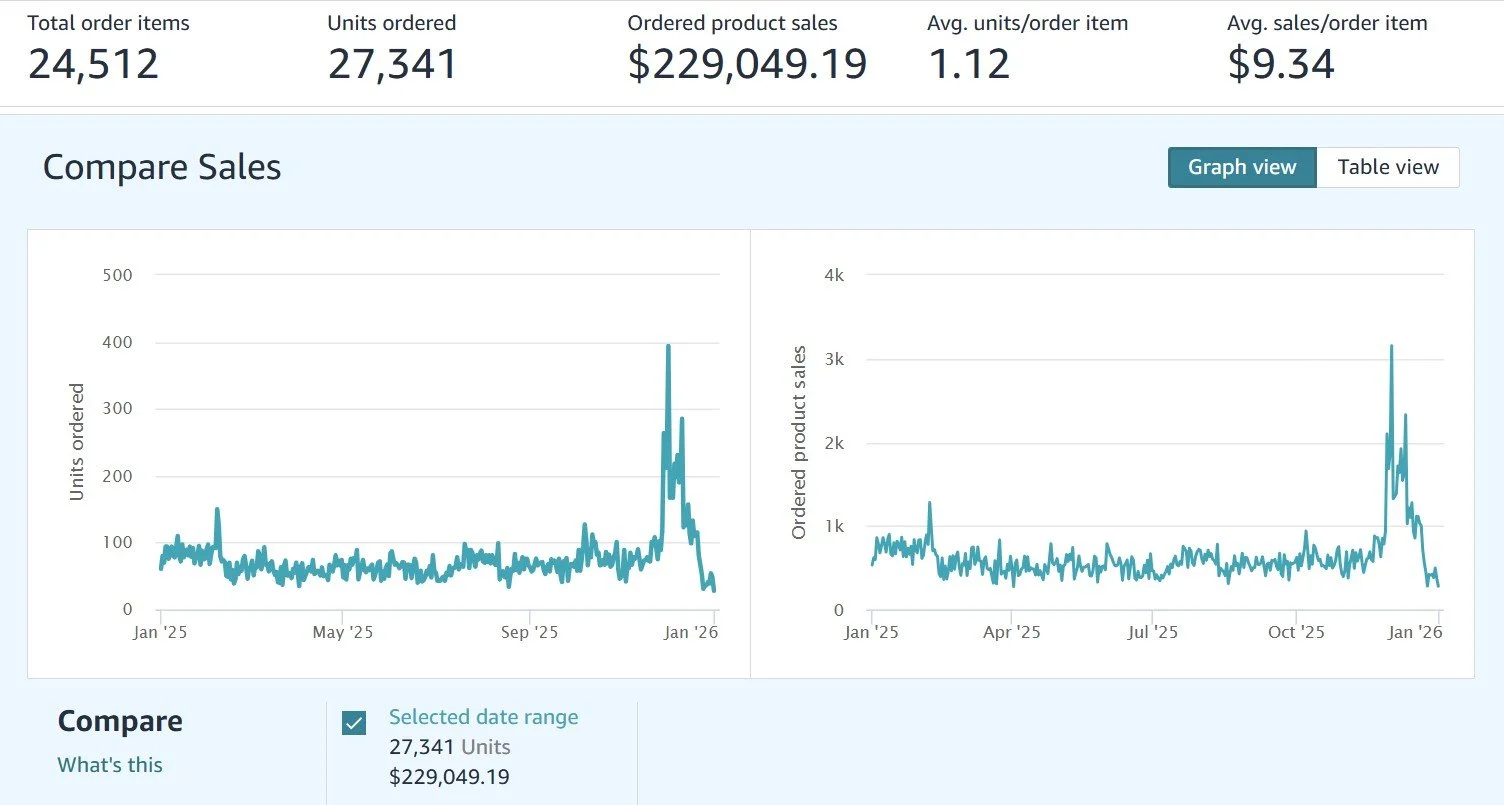
Generated $200K+ in revenue
Maintained profitability exceeding 40%
Sold 27,000+ units organically
Built a scalable fulfillment model capable of supporting continued growth
Achieved all results without paid advertising